 0
0
 0
0
Post Disclaimer
DISCLAIMER
The information on this website is intended to provide general education only. It is not a substitute for individualized medical advice, and applying the self-care concepts described is a personal choice. The science and strategies on this website are drawn from peer-reviewed research and clinical practice guidelines. However, before making any changes to your medication, starting new supplements, changing your diet, or managing a health condition, talk with a qualified healthcare provider about your specific situation.
Why Your Nervous System Gets Stuck in Survival Mode

Your nervous system's main job is to protect you. Every second of every day, your brain and body are constantly asking one important question: "Am I safe right now?"
To keep you alive, the brain has a built-in survival system that acts like a rapid response team. Different "survival teams" are designed to respond to different kinds of threats — emotional stress, illness, pain, exhaustion, inflammation, danger, loneliness, overload, or injury.
Standing at the center of this system is the thalamus, which acts like the brain's control station. It constantly receives information from your senses and body, then helps direct which survival response team should activate.
When the brain detects danger, the body shifts into survival mode — also called fight, flight, freeze, or shutdown. This system is controlled by the autonomic nervous system, which automatically manages things like heart rate, breathing, muscle tension, digestion, energy, and stress hormones.
Understanding the Nervous System
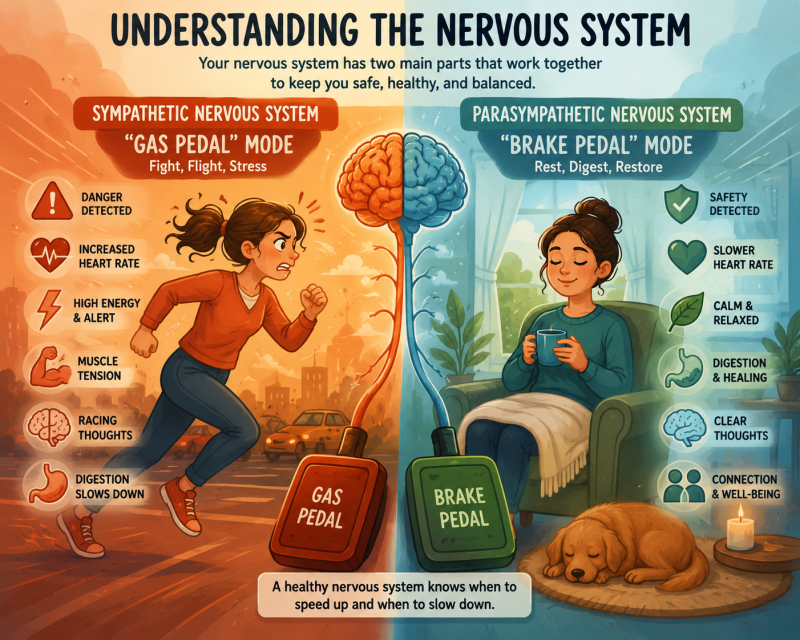
To answer that question, your brain is constantly scanning the world around you and the feelings inside your body. Dr. Stephen Porges, the creator of Polyvagal Theory, calls this process neuroception — your brain's automatic safety scanner. Before you even consciously think about something, your brain is already deciding:
- Is this safe?
- Is this dangerous?
- Do I need to protect myself?
If your brain senses safety, your body allows you to relax, connect with others, learn, focus, sleep, digest food, and feel calm. But if your brain senses danger, it activates survival mode — also called fight, flight, freeze, or shutdown.
The Gas Pedal and Brake Pedal
Your autonomic nervous system controls these automatic survival responses. It manages things like heart rate, breathing, digestion, stress hormones, muscle tension, energy, and alertness. There are two major parts:
Sympathetic Nervous System
Turns on survival mode — fight, flight, or freeze. Activates the "guard dog brain" focused on danger, fear, and protection. Reacts fast but does not always think clearly.
Parasympathetic Nervous System
Helps the body rest, heal, recover, and feel calm. Activates the "wise owl brain" — staying calm, thinking clearly, solving problems, and connecting safely with others.
The goal is balance, not shutdown
The goal is not to completely shut off the guard dog — it's important during real danger. The goal is helping the brain spend more time in the calm, balanced, wise owl state instead of constantly living in survival mode.
The Nervous System's Rapid Response Force

The thalamus acts like the brain's traffic director and control station. Once a possible threat is detected, the information is quickly passed to the amygdala — the brain's main "threat commander." The amygdala's job is to rapidly detect danger, rejection, conflict, fear, pain, or anything that might threaten survival. Working closely beside it is the hypothalamus, which helps control the body's stress response systems.
Once these survival systems are activated, the brain and body begin releasing powerful neurochemicals — the brain's messenger chemicals — that help prepare the body to fight, flee, protect, defend, or recover.
- AdrenalineIncreases heart rate, energy, alertness, and muscle readiness
- CortisolThe body's main long-term stress hormone that keeps the brain on guard
- GlutamateAn excitatory brain chemical that increases brain activity and overstimulation
- HistaminePart of the immune system — increases inflammation, itching, congestion, and irritation
- CytokinesInflammatory immune chemicals that can increase fatigue, body aches, brain fog, and sickness feelings
These chemicals are extremely helpful during real emergencies. But when the brain keeps activating survival mode too often, they can stay elevated for too long — leading to anxiety, emotional overwhelm, exhaustion, pain, inflammation, irritability, sleep problems, brain fog, and feeling constantly stuck in survival mode.
Why So Many People Get Stuck

These systems were designed to protect you during real danger, illness, injury, or emergencies. But today, many things can accidentally keep the nervous system stuck in survival mode for too long. Over time, the nervous system can become more sensitive and reactive. The brain starts expecting danger even when you are actually safe — leading to racing thoughts, emotional overwhelm, irritability, exhaustion, panic, brain fog, trouble focusing, muscle tension, sleep problems, and feeling constantly "on edge."
The Good News: The Nervous System Can Learn Safety Again
The nervous system is trainable. Every time you practice calming skills, healthy sleep, breathing exercises, movement, emotional processing, supportive connection, rest, recovery, mindfulness, or healthy routines, you are teaching your nervous system that it is safe enough to relax. Little by little, these repeated experiences help strengthen the wise owl brain and calm down the guard dog brain.
Below are the seven major stress systems that can activate survival mode. Each section explains why and how this affects the brain and body. Awareness of these systems helps you create healthy habits across all areas of your wellness.
Emotional & Attachment Threat System

What happens in the brain
- Amygdala becomes overactive
- Cortisol stays high
- Prefrontal cortex less active
- Nervous system stays tense
What triggers this
- Anxiety
- Rejection or conflict
- Negative self-talk
- Feeling unsafe with people
- Avoiding emotions
What it feels like
- Racing thoughts
- Irritability
- Panic
- Emotional numbness
- Trouble relaxing
Sleep, Recovery & Burnout System

What happens in the brain
- Amygdala more reactive
- Prefrontal cortex weakens
- Cortisol and adrenaline rise
- Glutamate rises (overstimulation)
What triggers this
- Less than 7 hours of sleep
- Staying up late
- Stress dreams
- Irregular sleep schedule
What it feels like
- Brain fog
- Mood swings
- Feeling overwhelmed
- Low patience
- Exhaustion
Immune & Inflammatory Stress System


What happens in the brain
- Cytokines increase inflammation
- Histamine rises
- Nervous system more reactive
- Energy redirected to healing
What triggers this
- Allergies
- Chronic illness
- Frequent colds
- Autoimmune issues
- Inflammation
What it feels like
- Fatigue
- Headaches
- Brain fog
- Feeling "run down"
Nutritional & Metabolic Stress System

What happens in the brain
- Blood sugar drops
- Stress hormones rise
- Nervous system becomes jumpy
What triggers this
- Skipping meals
- Sugar or processed foods
- Dehydration
- Low magnesium, vitamin D, B vitamins, iron
What it feels like
- Shakiness
- Irritability
- Anxiety
- Low energy
Pain & Protective Sensitization System

What happens in the brain
- Pain pathways more sensitive
- Amygdala stays alert
- Muscles stay tense
- Stress hormones increase
What triggers this
- Chronic pain
- Muscle tension
- Headaches
- Injuries
What it feels like
- Tightness
- Fatigue
- Pain flare-ups during stress
Oxidative Stress & Toxic Load System
What happens in the brain
- Inflammation increases
- Cells become stressed
- Nervous system overwhelmed
What triggers this
- Poor sleep
- Smoking or vaping
- Alcohol
- Pollution & overtraining
- Chronic stress
What it feels like
- Exhaustion
- Feeling inflamed
- Slow recovery
Cognitive Overload & Overstimulation System

What happens in the brain
- Glutamate increases
- Stress hormones rise
- Thinking brain tired
- Amygdala more reactive
What triggers this
- Social media
- Multitasking
- Constant noise
- No downtime
What it feels like
- Restlessness
- Trouble focusing
- Racing mind
- Trouble sleeping
Nervous System Survival Mode
Self-Assessment
For each statement, select the response that best describes your experience. There are 7 categories with 3 questions each.
Your Results
Categories ranked from highest to lowest activation
Reflection Questions
This quiz is not meant to diagnose a medical or mental health condition. It is designed to help you become more aware of the different stress systems that may be affecting your nervous system, emotions, body, sleep, and overall well-being. The goal is not perfection — the goal is learning how to help your brain and body feel safer, calmer, healthier, and more supported over time.

Change usually does not happen by accident — it requires intentional daily action, planning, and repetition. Many people want to calm their nervous system but feel overwhelmed and unsure where to start. This tracker organizes the major survival stress systems discussed in the article and gives practical daily skills to practice.
Using your scores on the quiz above, identify the daily skills and habits that help you keep the nervous system out of survival mode. Click the button below to open the fillable PDF tracker — you can print it or save it to your device.
From Survival Mode to Safety: Daily Skills Tracker
A fillable PDF organized around all 7 stress systems — with practical daily habits to practice, track, and build over time.
There is a healthy human inside every one of us. Even though we can't control everything that happens around us, we can learn to find more calm, peace, and focus by making small daily changes that help keep our nervous system in its calmer, balanced state. Your brain and body are always learning, and every healthy habit teaches them that you are safe enough to relax.
Review this guide often, take the quiz to see which stress system needs the most support, and download the daily skills tracker so you can keep practicing, growing, and strengthening the calmer version of yourself. Over time, these small steps add up — and your nervous system becomes a place where healing, clarity, and confidence can grow.
The information on this website is designed to offer self-care tips and recommendations based on evidence-based research and literature from professionals in each field. It is not intended to diagnose or treat any specific medical condition. Please consult with your healthcare provider before making any health-related decisions.


Discover more from Self-Reliant Wellness
Subscribe to get the latest posts sent to your email.